


The collision repair industry is undergoing a radical transformation due to technological innovations that have emerged over the past several years. These technological advancements are elevating the standards for repair accuracy and efficiency, while also challenging technicians to learn new, highly specialized skills. For car owners seeking collision repair in Lancaster County, PA, these changes mean faster turnaround times, more precise repairs, and greater overall satisfaction. This article delves deeply into how these breakthrough technologies are reshaping collision repair and what it means for the industry as a whole.
As vehicles integrate more computerized and digital systems, collision repairs no longer rely on just the mechanical expertise of the past. Modern auto body shops now utilize sophisticated tools—such as artificial intelligence, 3D printing, and robotics—to enhance productivity and minimize the margin of error in repairs. These advancements not only reduce costs and streamline the repair process but also safeguard the structural and operational integrity of vehicles, ensuring customer safety. Today’s auto body professionals must stay ahead of the curve, consistently embracing training and innovation to keep up with the ever-evolving landscape.
For customers and industry professionals alike, understanding the impact of these technologies is crucial. Knowing how repairs are done can lead to greater peace of mind, particularly as new materials and repair procedures become standard. By adopting these technologies, repair centers demonstrate their commitment to delivering high-quality, efficient, and environmentally conscious solutions—essential elements for thriving in the modern marketplace.
AI in Damage Assessment
Artificial Intelligence is bringing a significant shift to the estimation phase of collision repair. By harnessing vast collections of repair data, AI-powered platforms can instantly analyze photos of vehicle damage and deliver accurate repair estimates, eliminating lengthy wait times and minimizing human oversight. This process enhances efficiency at the front end, enabling shops to provide customers with prompt and accurate estimates while minimizing the potential for disputes or errors. Major insurance companies and auto body shops nationwide are increasingly investing in this technology to streamline claims processing and accelerate the journey from assessment to complete repair.
3D Printing for Replacement Parts
3D printing has revolutionized the way repair shops supply replacement parts, especially for rare, aged, or discontinued models. Thanks to this technology, technicians can fabricate precise replicas of broken or obsolete auto parts on-site. This shortens wait times, lowers costs, and reduces reliance on fluctuating global supply chains. As more shops acquire the ability to create complex parts through 3D printing, customers can anticipate a more efficient repair process, especially for unique or vintage automobiles. Industry trend reports indicate that the use of 3D printing in auto repair is growing rapidly as the technology becomes more affordable and accessible.
Augmented Reality in Technician Training
Technician training is another area experiencing a revolution thanks to augmented reality (AR). With AR headsets, service instructions and diagrams can be projected directly onto real vehicles, providing instant guidance as technicians perform complex repairs. This technology minimizes mistakes, shortens learning curves, and ensures more consistent repairs, even as vehicles become more advanced and reliant on electronics. AR is particularly valuable in training programs, allowing new technicians to become proficient more quickly and safely. As this technology matures, it is also expected to become mainstream in everyday repair shops, further improving repair quality and speed.
Robotics and Automation in Repair Processes
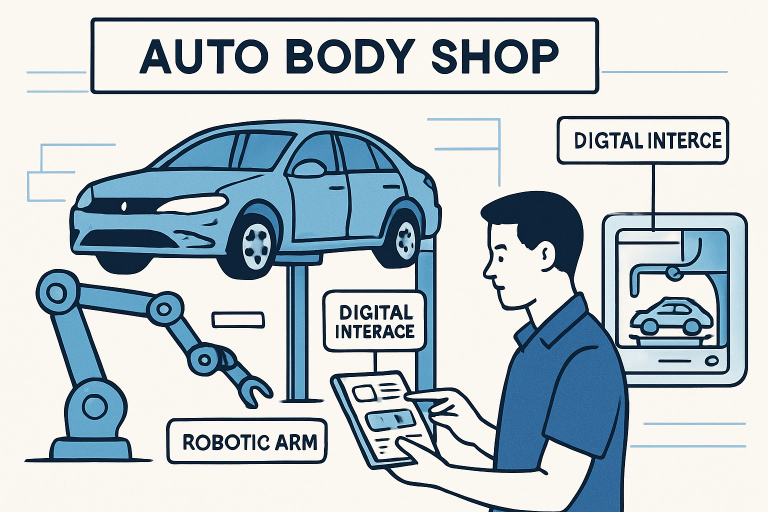
Robotics is making significant inroads into repair shops, particularly in areas that require high precision or repetitive motion—such as welding, sanding, and painting. Robotic arms and automated machinery can carry out these tasks with unmatched consistency and speed, enhancing quality and reducing the risk of injury for technicians. For fleet operators or businesses with large volumes of vehicles, automated solutions streamline operations, cut costs, and ensure fleet-wide uniformity in repair quality. The integration of robotics sets a new standard for the efficiency and accuracy of modern collision repair processes, benefiting both providers and customers alike.
Advanced Materials and Repair Techniques
Vehicle manufacturers are continuously developing lightweight, ultra-durable materials—including high-strength steel, aluminum, and carbon fiber—to enhance safety and efficiency. Each of these materials requires its own specialized repair approach; for example, aluminum requires distinct welding techniques to prevent contamination, while composite materials like carbon fiber may necessitate full replacement to maintain strength. As advanced materials become more commonplace, auto body technicians are expected to receive ongoing education and cross-training to stay current with the latest techniques and technologies. The evolving skill requirements underscore the need for ongoing investment in workforce development and training across the industry.
Data-Driven Quality Control
The adoption of data analytics tools is transforming how auto body shops monitor and maintain quality control. Technologies such as cameras, sensors, and performance-tracking software systematically record each step of the repair process. This data is crucial for detecting deficiencies, benchmarking technician performance, and enforcing standardized quality across repairs. Fleet operators, in particular, benefit from these insights, as they can ensure consistent, top-tier repairs for every vehicle. By leveraging analytics, shops not only minimize mistakes but also foster continuous improvement and accountability throughout their teams.
Eco-Friendly Paint and Coatings
Environmental responsibility has become a key focus in collision repair. Water-based paints and eco-friendly coatings are rapidly replacing traditional solvent-based systems, significantly reducing emissions of volatile organic compounds (VOCs). These paints are safer for technicians and better for the environment, while advanced clear coats and ceramic finishes provide superior protection against UV damage and corrosion. Environmentally conscious car owners can now expect high-quality, long-lasting finishes, while repair shops actively contribute to sustainability within the industry.
The Future of Collision Repair
The future of collision repair lies in continuous adaptation and the seamless integration of new technologies. As cars and trucks become increasingly sophisticated, repair shops must invest in updated equipment, ongoing technician education, and best-in-class digital resource management. Embracing these advancements not only improves workflows and customer outcomes but also ensures that auto body businesses can thrive in an industry that is constantly on the move. In the years ahead, collision repair professionals who remain agile and tech-savvy will be best prepared to meet the needs of both modern vehicles and discerning customers in a rapidly changing world.

Sharon Howe is a creative person with diverse talents. She writes engaging articles for WonderWorldSpace.com, where she works as a content writer. Writing allows Sharon to inform and captivate readers. Additionally, Sharon pursues music as a hobby, which allows her to showcase her artistic abilities in another creative area.